

A custom stone coffee table should relate to the seating, the room’s circulation and the way the space is used. Shape determines how it fits into the arrangement, scale establishes its presence, and the material gives it character. The strongest designs resolve all three, creating a table that is both useful and visually compelling.
Stone invites a particularly sculptural approach. The edge of the top, the curve of a base and the space between supporting forms can be as expressive as the material itself.
Start with the Seating Arrangement
Before selecting a table, look at the furniture around it. A long sofa, a pair of chairs and a sectional create different opportunities for shape and placement. Consider where people sit, how they reach the table and which routes through the room should remain comfortable.
Measure the available space, then mark the proposed footprint on the floor. This simple exercise helps reveal whether a table feels balanced within the seating group or occupies too much of the circulation area.
Think about daily use as well as appearance. A table intended for books, drinks and informal entertaining may need a different surface arrangement from one chosen primarily as a sculptural centerpiece.
Choose a Shape That Supports the Composition
Rectangular and Elongated Forms
An elongated table can reinforce the horizontal line of a sofa and create a clear center within a larger seating group. Its edges and base determine whether it feels formal, relaxed or architectural.
Round and Oval Forms
Curved forms can soften a room dominated by straight lines. They may also help a table relate to seating positioned around several sides. Check the actual footprint carefully; a curved outline still needs sufficient space around it.
Rounded Triangular and Sculptural Forms
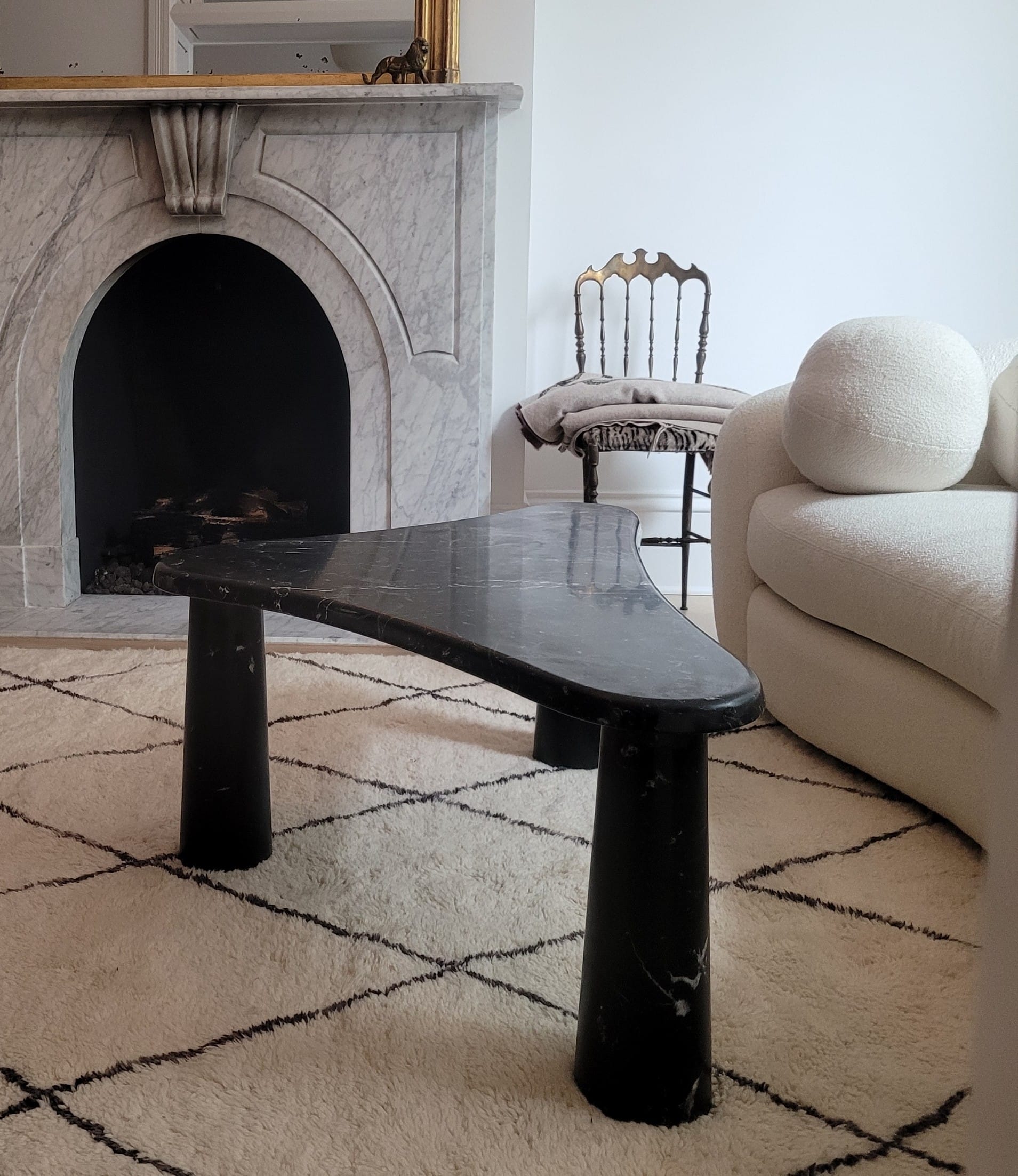
A less conventional shape can create movement without relying on decorative objects. Atelier Jouvence’s Chloe Coffee Table, for example, combines a triangular top with rounded corners and curved sides above three rounded bases. It offers a concrete example of how tabletop and support can form a single sculptural composition.
Balance Physical Size and Visual Weight
Two tables with similar dimensions can feel very different in the same room. A broad solid base may create a grounded presence, while separated supports can allow more of the floor to remain visible.
Consider the view from the doorway as well as from the sofa. A table should not be judged only from above. Its side profile, top thickness and base spacing contribute to the room’s composition at seated eye level.
Discuss the preferred height in relation to your actual seating. A low lounge sofa and a more upright seating arrangement call for different conversations about comfort and reach. Rather than treating a standard dimension as automatically correct, use the furniture you own or have specified as the reference.
Select the Individual Stone, Not Just the Category
Choosing marble, limestone or travertine establishes a direction, but the individual stone matters. Color, natural markings and surface treatment can change the character of a table substantially.
A quieter material may emphasize the outline and carving. Stronger veining may make the surface itself the main event. Consider how much visual activity is already present in the rug, upholstery, fireplace and artwork.
Review Atelier Jouvence’s stone options alongside your room’s finishes, and ask which materials are appropriate for the proposed design. Confirm the available choices for the specific table rather than assuming every stone can be substituted without further discussion.
Give the Base and Edge the Same Attention as the Top
The tabletop often receives the most attention, but the base gives a stone coffee table much of its identity. Rounded supports, a pedestal or a more architectural composition can each establish a different rhythm.
The edge profile also deserves consideration. A gently rounded edge can reinforce a flowing form, while a more defined profile may suit a room with crisp architectural lines. Viewed together, the top, edge and base should feel like a resolved design.
Custom dimensions and shapes should be reviewed with the maker so the construction suits the proposed piece. Include access and placement in the discussion, particularly when the table will be delivered to an upper floor or through restricted openings.
Plan for Everyday Stone Care
A beautiful table should also fit your expectations for maintenance. Ask for care guidance specific to the selected stone and finish before commissioning.
The Natural Stone Institute’s care guidance recommends coasters, prompt attention to spills and appropriate gentle cleaning. It also explains that acidic products can etch calcareous stone and that sealing can improve stain resistance without making stone stain-proof. Avoid treating a protective finish as a substitute for sensible everyday care.
Commission a Table That Belongs in Your Room
Bring seating dimensions, room photographs, your proposed footprint and references for the shapes you prefer. Identify whether you want to adapt a collection design or explore an original piece.
The Atelier Jouvence stone furniture collection offers a starting point for comparing forms. To discuss a coffee table tailored to your interior, contact the studio with your room details and preferred material direction.
