
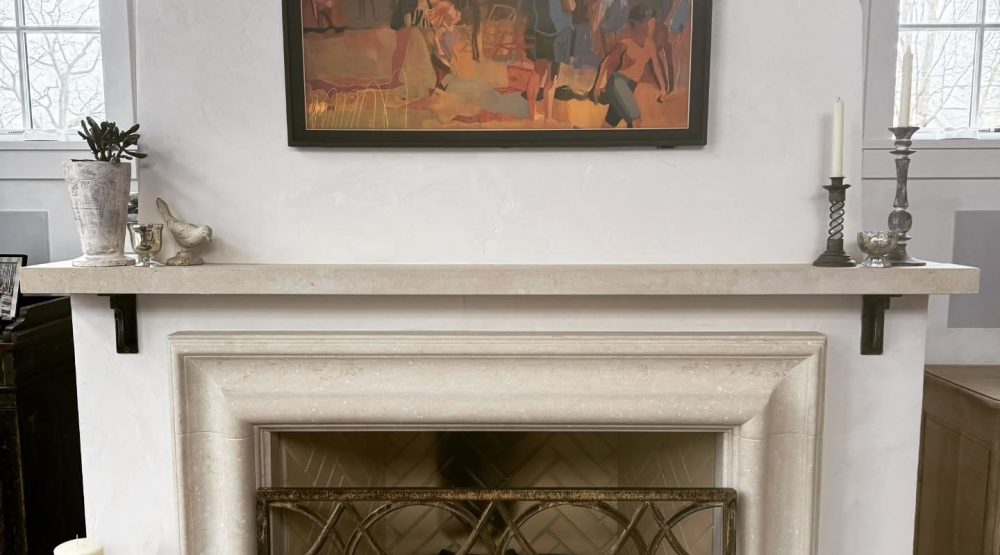
A custom stone fireplace mantel should be chosen in relation to the room, the fireplace opening and the surrounding architecture. Size establishes its presence, the carved profile shapes its character, and the stone determines how it responds to light. Considering these three elements together produces a more coherent design than selecting each independently.
The most compelling mantels can be richly ornamented or remarkably restrained. What they share is a sense of belonging: the fireplace feels considered from every angle, rather than simply fitted against a wall.
Understand the Mantel, Surround and Hearth
Fireplace terminology can be surprisingly fluid. A mantel may refer to the shelf above the opening or to the larger architectural composition that includes the shelf and supporting sides. The surround frames the firebox opening, while the hearth forms the surface at its base.
When discussing a custom design, identify precisely which elements you want included. A photograph can communicate the overall mood, but a marked drawing helps distinguish the shelf, legs, inner surround and hearth. This clarity makes it easier to discuss proportions and compare proposals.
Choose Mantel Size in the Context of the Whole Room
Begin with the fireplace wall, not an isolated measurement. A mantel that looks generous in a close-up photograph may feel modest beneath a high ceiling. Conversely, a deep shelf and broad supporting legs may dominate a smaller room even when the opening itself is relatively compact.
Consider the composition from the places where people actually experience it: the doorway, the sofa, an adjoining dining area. The relationship to windows, built-in cabinetry and nearby millwork often matters as much as the dimensions of the firebox.
Measurements Worth Gathering
- The width and height of the existing or proposed fireplace opening.
- The overall wall width and ceiling height.
- The position of adjacent windows, cabinetry and architectural trim.
- The proposed hearth dimensions and surrounding finished floor level.
- Any artwork, mirror or other element intended for the wall above.
These measurements provide a starting point for design discussion. They do not replace final site verification. The fireplace equipment, installation conditions and required clearances should be coordinated with the appropriate project professionals before dimensions are finalized.
Let the Carved Profile Establish the Character
The outline of a mantel is only part of its design. Moldings, curves and transitions create shadows that can make the same stone appear crisp, soft, substantial or delicate.
A projecting shelf with layered moldings may suit a room with detailed cornices and paneling. A broad, rounded surround can introduce softness into a more linear interior. A pared-back profile can let the stone surface carry most of the visual interest.
There is no need to match every detail in the room literally. A classical mantel can create a thoughtful counterpoint to contemporary furniture. The goal is a compatible scale and a clear relationship between the fireplace and its setting.
Explore the Atelier Jouvence fireplace collection to compare different architectural profiles before narrowing the direction of your own design.
Choose Limestone or Marble for the Specific Design
Stone selection benefits from looking beyond the material name. Two limestones can differ noticeably in tone and texture, just as two marbles can create entirely different moods.
A quieter stone may help a detailed profile remain legible. A stone with pronounced movement can become the central feature of a simpler composition. Neither approach is inherently traditional or modern; the effect depends on the individual material and the way it is carved.
Review samples alongside the room’s flooring, wall color and other permanent finishes. Look at them in the room’s actual light wherever possible, and discuss how natural variation may appear across the finished mantel. Atelier Jouvence’s natural stone options provide a useful starting point for that conversation.
Make the Shelf Depth an Intentional Decision
A projecting shelf creates a stronger horizontal line and a deeper shadow beneath it. A shallower profile may feel quieter, particularly in a room where the fireplace shares attention with large windows or artwork.
Consider how the shelf will be used, but avoid designing solely around decorative objects. The mantel should remain resolved when the shelf is empty. Its projection also belongs in the overall design and installation discussion, rather than being treated as a decorative afterthought.
What to Bring to a Custom Mantel Consultation
A productive first conversation does not require a finished design. Bring photographs of the room, preliminary measurements and a small selection of reference images. Explain what appeals to you in each reference: the proportions, the carved detail, the material or the overall atmosphere.
Also identify what is already fixed and what can still change. An existing firebox, established cabinetry layout or retained hearth will shape the possibilities differently from a new construction project.
Atelier Jouvence creates custom carved stonework in Chicago and works with homeowners and design professionals. To develop a mantel that responds to your room, contact Atelier Jouvence with your project details and preferred design direction.
