
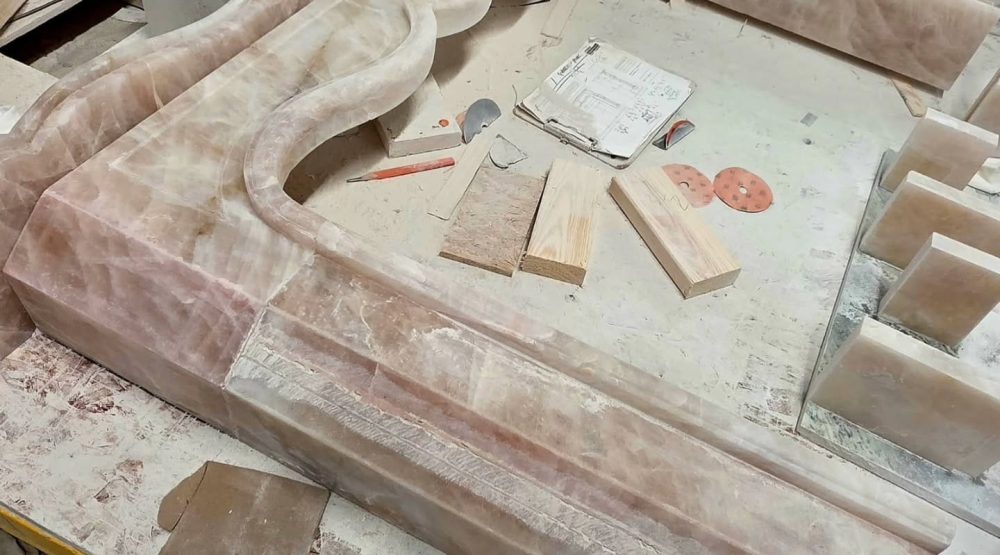
Planning a bespoke stone fireplace begins with a clear brief: how the room should feel, which parts of the fireplace are being commissioned, and what architectural or installation conditions the design must accommodate. You do not need every detail resolved before approaching a stone carver, but a few well-chosen references and accurate project information make the conversation more useful.
Commissioning is where an idea becomes a piece of architecture. It brings the homeowner’s vision, the designer’s composition and the artisan’s understanding of stone into the same discussion.
Define What Bespoke Means for Your Project
A bespoke stone fireplace is developed around the requirements of a particular setting. That might involve an original design, the adaptation of a collection piece, or a composition inspired by an architectural reference.
Begin by describing the scope. Are you commissioning a mantel and surround, a hearth, an overmantel, or a larger fireplace wall? Are you retaining an existing fireplace opening or planning around new equipment? These distinctions affect both the design brief and the information needed for a proposal.
For inspiration, the Atelier Jouvence fireplace collection offers a range of starting points. A collection can help you identify the visual language you prefer without requiring the final composition to be identical to a reference.
Build a Brief Around the Room’s Architecture
Before choosing decorative details, consider the room itself. Ceiling height, wall width, windows, millwork and sightlines establish the setting in which the fireplace will be experienced.
A room with strong symmetry may benefit from a fireplace that reinforces it. In a more informal interior, a quieter surround may allow the furniture and artwork to create the movement. A mantel can also bridge different styles, bringing a sense of architectural structure to a room with contemporary furnishings.
Describe the atmosphere you want in ordinary language. Calm, substantial, intimate and expressive are often more useful starting points than a collection of style labels with conflicting meanings.
Use Reference Images to Explain Specific Preferences
A reference photograph is most useful when accompanied by an explanation. Perhaps you admire the curve of an opening but dislike the ornament above it. You may want the scale of one mantel and the restraint of another.
Keep the reference selection focused. A few annotated images can communicate a direction more clearly than dozens of unrelated examples. Include photographs of the actual room or relevant architectural drawings so the references can be considered in context.
Atelier Jouvence’s custom stonework gallery shows the breadth of work beyond the standard collections. The studio can discuss projects beginning with a photograph, a drawing or a concept.
Discuss Stone and Finish Together
The appearance of a bespoke stone fireplace depends on more than its silhouette. The selected stone, surface treatment and carved details need to work together.
Ask to review suitable material options and samples. Discuss the amount of natural movement you prefer, the relationship to other finishes in the room, and how the proposed material will read across the larger composition.
A small sample is useful for color and texture, but it cannot show every characteristic of a finished piece. Ask how material selection and natural variation will be communicated for your particular project. The stone options page introduces the studio’s materials and sample inquiries.
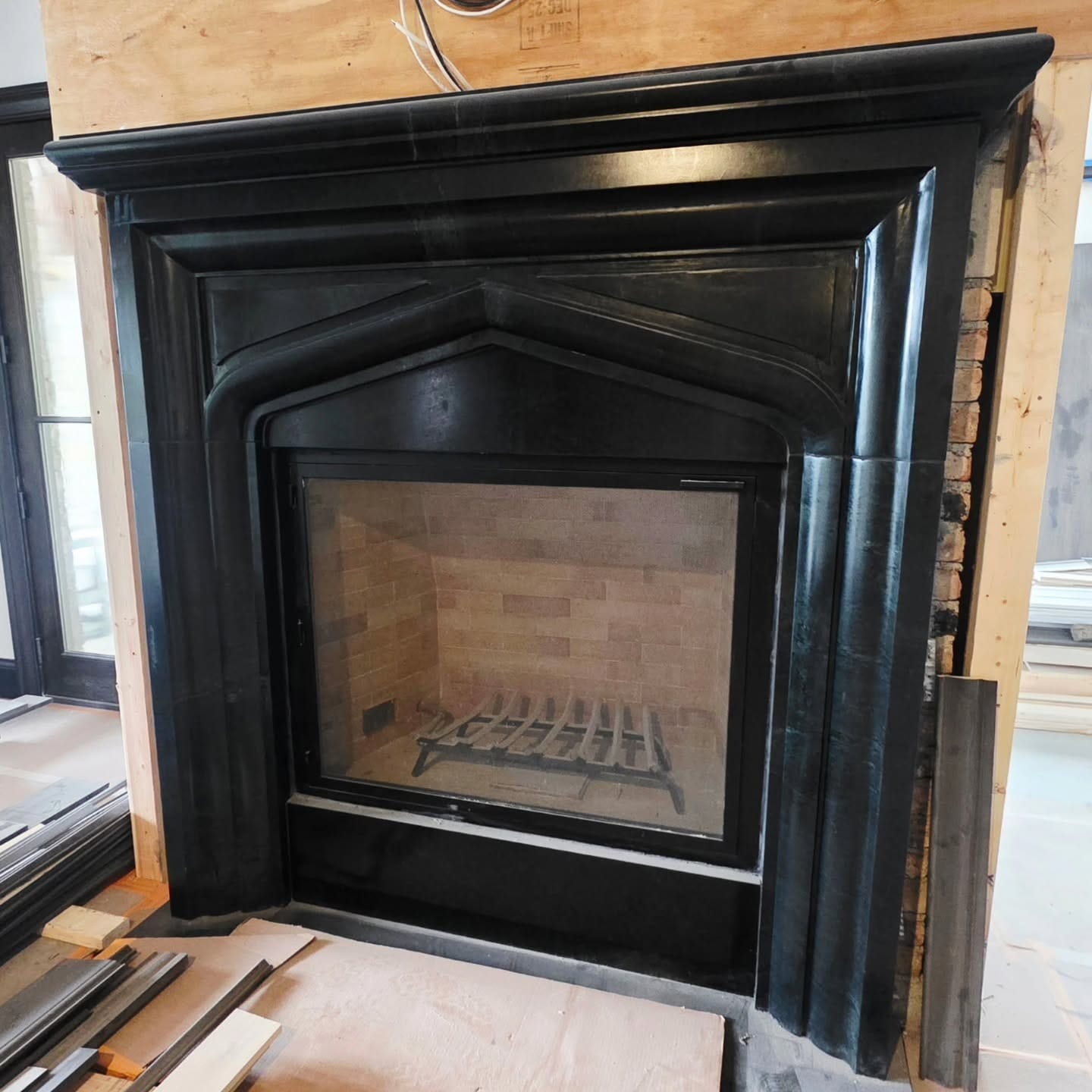
Coordinate the Stonework with the Fireplace Equipment
The carved stone composition and the fireplace equipment need to be planned together. Share the equipment model and its installation information with the people responsible for the design and installation.
A renovation also requires an understanding of the existing conditions. Photographs alone may not reveal how the current surround is attached or what lies behind it. Clarify who will inspect the site, verify measurements and coordinate any preparation work.
The stone carver, architect, builder and fireplace specialist may have different responsibilities. Agree on those responsibilities before the design is treated as ready for production.
Ask for a Clearly Defined Proposal
When comparing proposals, compare the same scope. A carved surround alone is different from a package that includes additional stone elements, transport or site work.
- Which stone components and design details are included?
- How will dimensions, material and finish be approved?
- Who supplies and verifies the final site measurements?
- What delivery and installation arrangements are included or separate?
- How are revisions handled after approval?
- What is the current production estimate for this specific project?
Provide your desired completion date early, while keeping it separate from a confirmed production commitment. The schedule should reflect the actual design, material and coordination requirements rather than an assumed standard lead time.
Prepare for the First Conversation
Gather room photographs, available drawings, fireplace equipment information, preliminary dimensions and a concise description of your preferred direction. Include the project location and identify the architect, designer or builder involved.
Atelier Jouvence’s Chicago studio brings French stone carving expertise to custom fireplace projects. Start a project conversation with the information you have, and identify the decisions that still need to be developed. A well-prepared brief leaves room for the artisan’s contribution while giving the design a clear foundation.
