
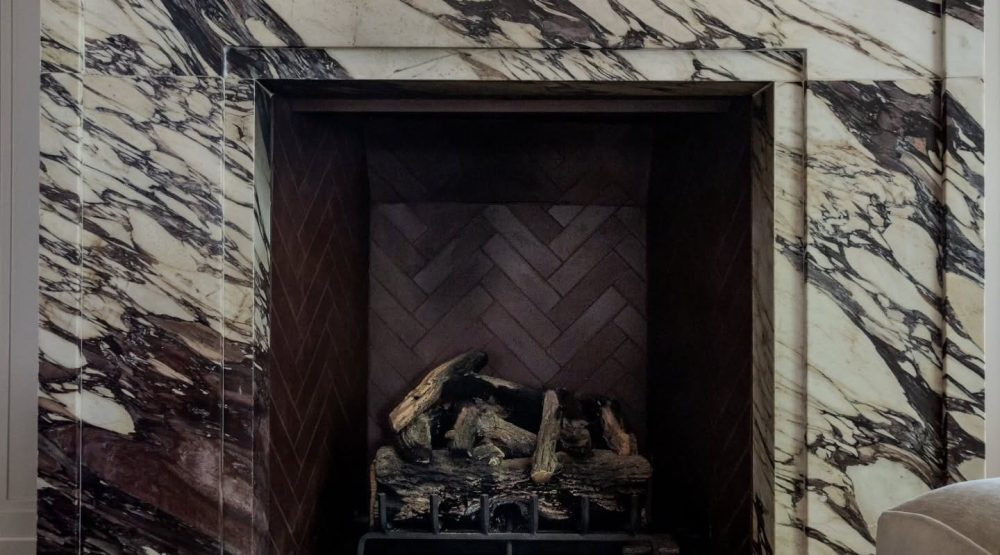
Choose an arched stone fireplace surround when you want the opening to introduce a curve into the room’s composition. Choose a rectangular profile when a strong horizontal line and a more linear frame suit the architecture. Neither shape belongs exclusively to a traditional or contemporary interior; proportion, carved detail and the selected stone determine the final character.
The useful question is how the fireplace should relate to the room. A curved opening can soften a wall of straight lines, while a rectangular surround can bring structure to an interior filled with rounded furniture and decorative objects. Looking at the room as a whole makes the choice more deliberate.
First, Identify Which Part of the Fireplace Is Arched
In a reference photograph, several different features may create the impression of an arch. The inner edge of the stone surround might curve above the opening. The outer silhouette or mantel might be shaped, or a separate architectural feature above the fireplace might supply the curve.
Distinguish those details before discussing a design. A gently curved mantel and a fully arched opening are different compositions, even if both feel softer than a straight lintel. Mark the part you admire in a reference image rather than relying on the word “arched” alone.
The stone profile also needs to be considered alongside the actual fireplace equipment. Share the appliance information with your designer and fireplace specialist; an inspiration image does not establish whether its arrangement is appropriate for your project.
What an Arched Stone Fireplace Surround Brings to a Room
A curve changes the movement of the eye. Instead of stopping at a straight horizontal edge, the eye follows the opening upward and across. That movement can make the fireplace feel more fluid, particularly when the surrounding composition is restrained.
The shape does not have to be elaborate. A broad, quiet curve with little ornament may suit a room where texture and silhouette provide most of the interest. A more expressive profile can become part of a richer architectural language.
Consider how other curves appear in the room. An arched doorway, rounded chair or oval table may provide a point of connection. Repeating every curve is unnecessary; one well-placed relationship can be enough.
When a Rectangular Surround Makes More Sense
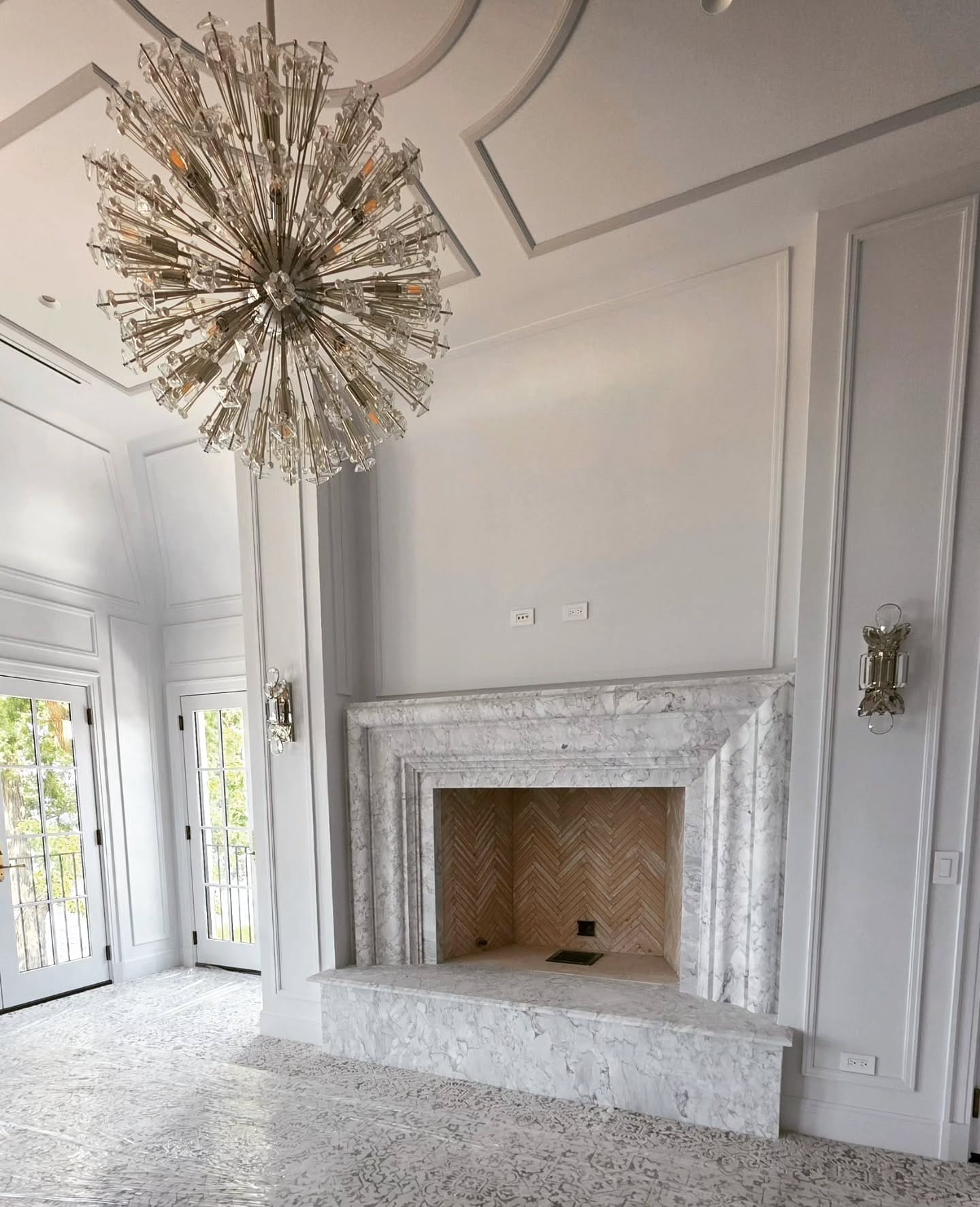
A rectangular stone surround gives the fireplace a clear vertical and horizontal framework. It can sit comfortably beside paneling, shelving and cabinetry because the edges provide straightforward lines of reference.
That clarity is useful in a room with several competing features. A composed rectangular frame can give the eye somewhere to settle without introducing another dominant gesture.
Rectangular does not mean plain. A surround can have deep moldings, sculpted supporting elements or a projecting shelf while retaining an essentially linear opening. Equally, it can be reduced to a few carefully considered planes.
The Modern fireplace surround in Atelier Jouvence’s collection offers an example of a design described through spare lines and a clean contemporary character.
Judge Proportion Before Ornament
A favorite detail cannot resolve a composition that feels out of scale. Before choosing carving, compare the proposed opening and outer surround with the wall width, ceiling height and neighboring architectural elements.
Look at the design in an elevation that includes the room around it. Then consider the view from the entrance and the main seating area. A fireplace experienced at an angle may read differently from the straight-on photograph that inspired it.
- Does the shape leave an intentional amount of wall above the mantel?
- How does the surround relate to nearby windows or built-in furniture?
- Will artwork or a mirror reinforce the composition or compete with it?
- Does the profile still feel balanced without accessories on the shelf?
Separate the Curve from the Carved Detail
Shape and ornament are related decisions, but they are not the same decision. A curve can be the main gesture, or it can support a more intricate composition.
Atelier Jouvence’s Louis XV mantel combines a bow-like form with sculpted jambs and organic ornament. It illustrates how a curved mantel can establish character through several coordinated details, rather than through the opening alone.
Use such references to identify what you actually want to carry forward: the outline, the transitions between elements, the amount of ornament or the overall sense of movement.
Consider the Stone Alongside the Profile
A quieter surface can make the edge of a curve especially noticeable. A stone with stronger natural movement can give even a simple rectangular surround a more expressive presence.
Review limestone and marble options with the surrounding flooring, paint and permanent finishes. Ask how the proposed material will read across the design, rather than judging it only as a small sample in isolation.
Bring a Clear Shape Question to the Design Conversation
Gather photographs of the room, available dimensions and two or three annotated references. Explain whether you want the fireplace to feel softer, more architectural, more restrained or more expressive. Those intentions can guide the discussion before a particular style is selected.
Explore the Atelier Jouvence fireplace collection to compare profiles, or contact the studio to discuss a stone surround developed for your room. The strongest choice is the shape that supports the complete composition.
